i
The music
Live folk tunes, played up close: melodion, fiddle, mandolin, accordion. Sometimes drums. Many people come for the music and stay for the dance, or the other way around. Musicians are always welcome.
We are a friendly morris dancing side in the Staffordshire Moorlands. Whether you danced years ago, play an instrument, want to get fitter, or just fancy a new social circle, we would love to meet you. No experience needed - we teach as we go.
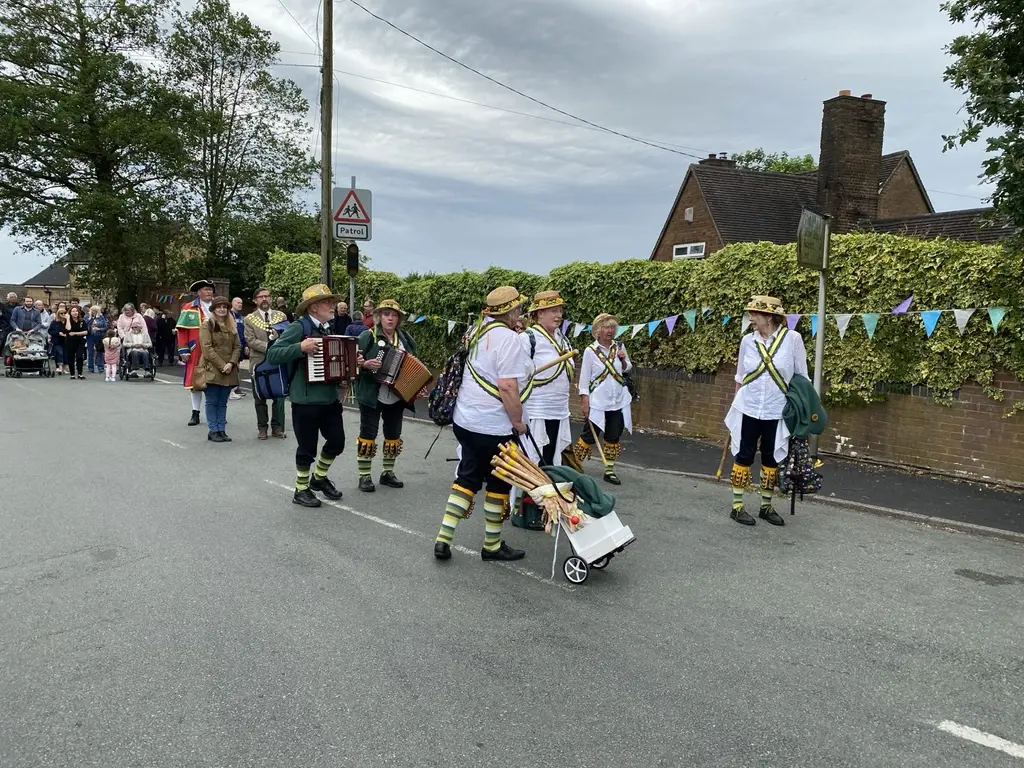
It is danced in country lanes, market squares, in front of pubs, at folk festivals, and on village greens. There is live music - usually fiddle, accordion or melodion. There are sticks and there are handkerchiefs. There is, almost always, a pint at the end.
Morris dancing nearly disappeared during the Industrial Revolution. It was revived in the early twentieth century by people who tracked down the last village dancers still doing it. Today there are hundreds of sides across the British Isles, each with its own kit, its own tunes, and its own way of doing things.
Live folk tunes, played up close: melodion, fiddle, mandolin, accordion. Sometimes drums. Many people come for the music and stay for the dance, or the other way around. Musicians are always welcome.
Footwork, jumps, side-steps, sticks meeting sticks. It is good for you - balance, rhythm, coordination - and it does not feel like exercise. An hour of practice goes by faster than you think.
Morris is intentionally social. You learn together. You travel to other sides' dance-outs. You become close to people of every age who do not work in your industry and do not know your colleagues. That is increasingly rare.
Not a museum piece - a living thread. The dance you learn on Friday was probably danced by someone in a Cotswold village in 1800. You become part of how that thread continues.
Summer means dance-outs at country pubs, market squares, folk festivals and "days of dance" where sides from across a region meet, dance for an hour, then share a pie and a pint. May Day mornings are particularly good.
Everyone learned. Nobody was born knowing this. Sides know how to teach newcomers, often have free taster sessions, and there is no audition. Most have practice in a hall or a pub, an upper or lower age limit of "let us know what you'd like to try", and a strong tradition of tea.
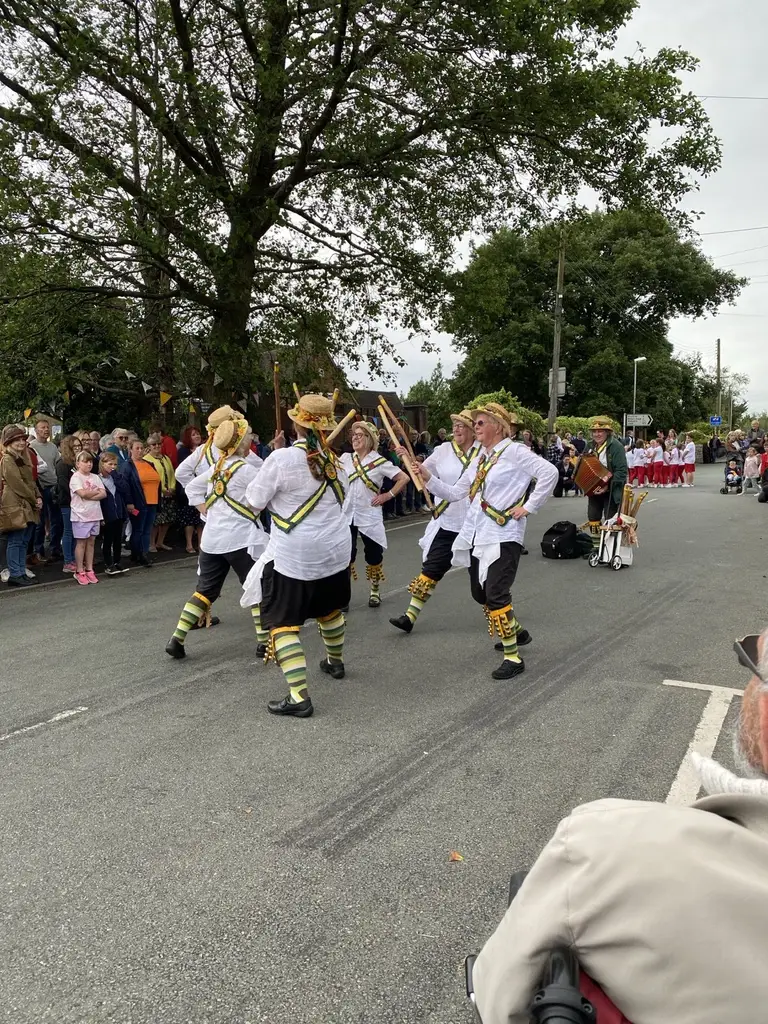
Plain-English answers to "what happens", "what to wear", "do I need to be fit", "can I just watch?".
Read it ->Cotswold, Border, Northwest, Molly, Rapper, Longsword, Clog. They look completely different - and they are.
Have a look ->Sides we've danced with across the country. Useful if you live closer to one of them than to us in Leek.
Browse ->"I started at 48." "I came for the music." "I thought I'd be terrible. Everyone was lovely."
Read them ->May Day, summer dance-outs, autumn festivals, winter wassails. The morris year.
See dates ->Ten years of dancing out, in country lanes, market squares and folk festivals.
Browse ->